Every mortality analysis rest on a fundamental assumption: that the underlying death data is accurate, complete, and current. For most research teams, that assumption goes unexamined. The data comes from a familiar source; it gets loaded into the pipeline, and the study moves forward.
Our new study shows that assumptions carry real risk.
The problem with relying on one source
No single mortality data source captures all deaths at a national level. Government administrative datasets like the SSA Death Master File offer structured records and relatively low error rates, but they carry reporting delays and miss a significant share of deaths. Cemetery and burial records contribute strong coverage for older deaths and recover demographic fields that administrative sources often leave blank, but they don’t document every death event. Memorial platforms and obituaries publish death information quickly, often before official registrations are processed, but accuracy and demographic completeness vary.
Each source type has a different failure mode. When you rely on only one, you inherit all its weaknesses with none of the corrections that complementary sources provide.
What the data shows
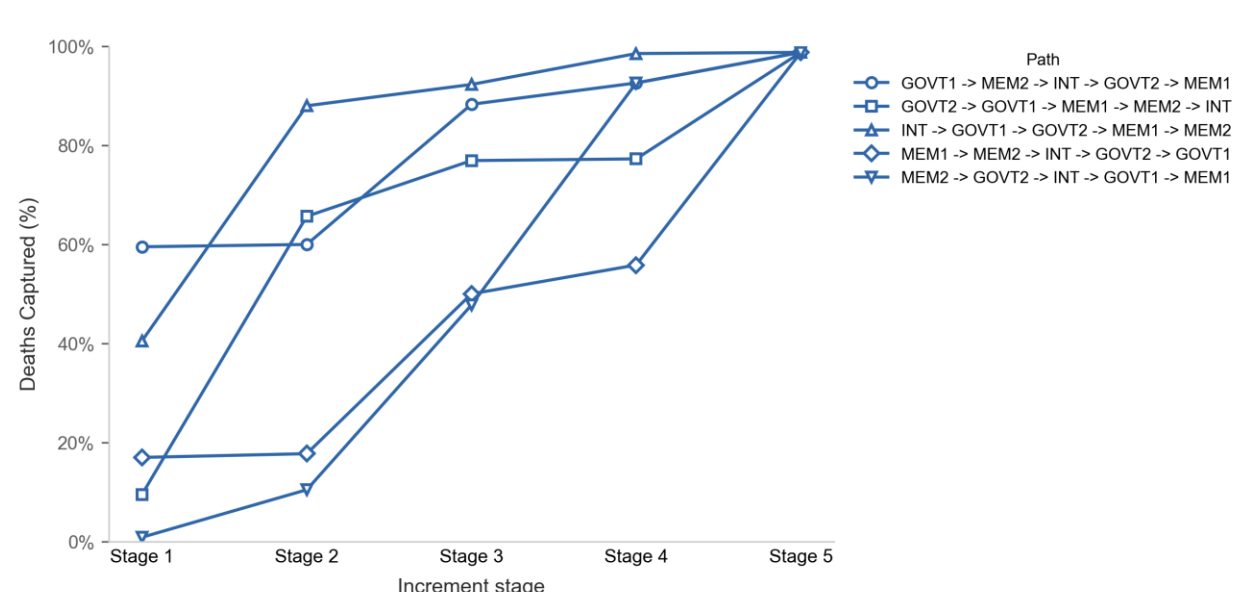
Veritas researchers analyzed 120 possible consolidation paths, adding source categories, and measuring performance at each stage. The results are consistent regardless of where you start: coverage, completeness, timeliness, and data quality all improve as sources are added.
Starting from the SSA (GOVT1), a single-source database misses approximately 40% of death events. Adding interment records alone lifts coverage by more than 20 percentage points. By the time all five source categories are consolidated, coverage reaches 98.8%, regardless of the starting source.
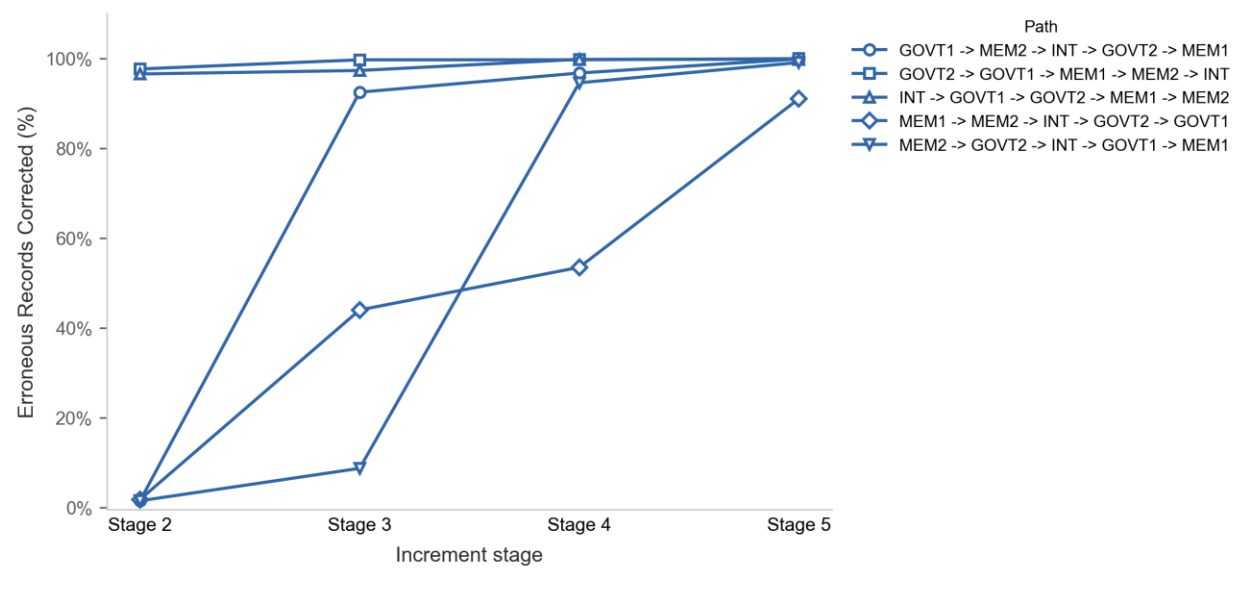
The quality findings are equally striking. Even high-quality administrative sources contain erroneous death dates. Introducing a second source corrects a large share of those errors, and a full composite database corrects nearly all of them.
What this means for your research
Under-coverage in mortality data introduces systematic bias into survival estimates, incidence calculations, and health equity analyses. Missing demographic fields blocks cohort linkage and stratification. Errors in date of death distort outcome timing and causal inference.
These aren’t edge cases. They’re predictable, measurable problems that a multi-source approach directly addresses.
Download the full study to see the complete results across all 120 consolidation paths.