While the label ‘research grade’ is frequently used for healthcare datasets, what specific criteria must mortality data meet to truly earn that designation?
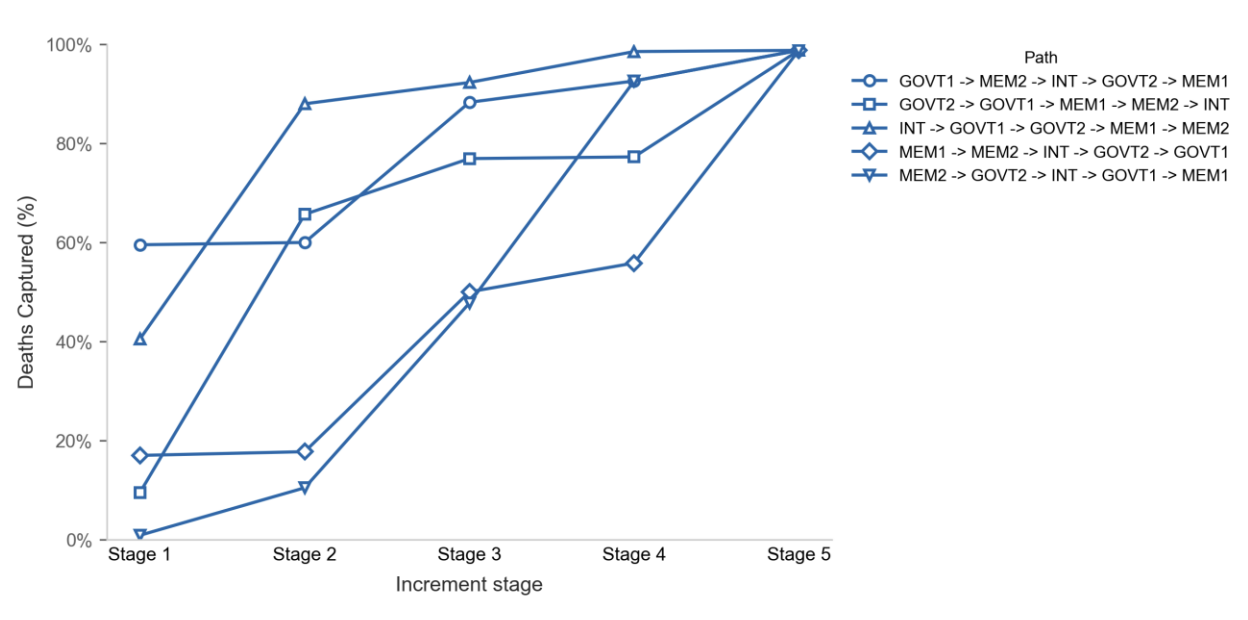
Our new study proposes a clear answer: a mortality database must perform well across four distinct dimensions to support rigorous research. Coverage, completeness, timeliness, and quality are not interchangeable, and weakness in any one of them degrades downstream analyses in different ways. In this study, we sample “consolidation paths”, each defining a specific order of consolidation across multiple source categories. Within each consolidation path, we provide insight into enhancement of data across the four dimensions listed.
Coverage: proportion of deaths detected
High coverage is the baseline requirement. A mortality database that misses 40% of deaths produces survivorship bias in any analysis that depends on it. The study shows that the highest-performing single administrative source still misses roughly 40% of death events. Only a multi-source composite database approaches comprehensive national coverage.
Completeness: presence of key demographic fields
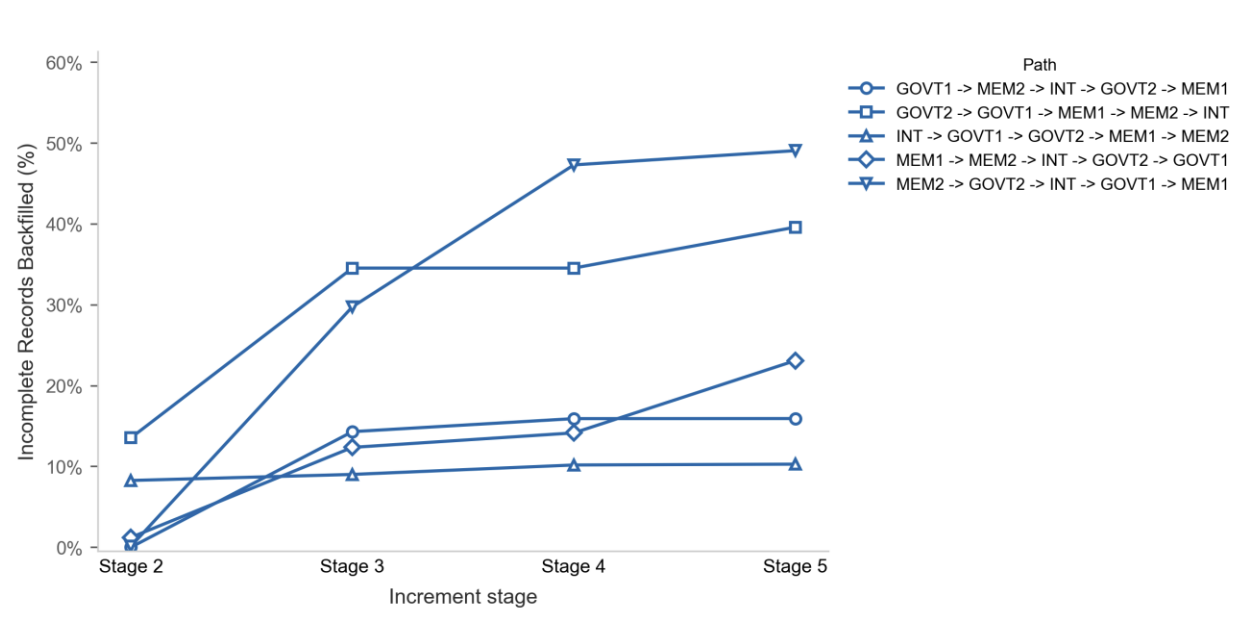
Coverage tells you how many deaths are captured. Completeness tells you whether those records are usable. A record missing date of birth or date of death cannot be reliably linked to a patient cohort or used to calculate survival time. The study finds that government sources provide the largest contribution to completeness recovery, backfilling up to 29% of incomplete records from other sources. No single source achieves full completeness on its own; but a composite dataset build ensures maximal record completeness for use in research.
Timeliness: lag between death occurrence and database capture
For real-world evidence (RWE) generation and near-real-time analytics, data latency matters. The study evaluates two timeliness metrics:
- Percentage of deaths captured within 14 days of occurrence
- Median lag in days.
Memorial sources, primarily obituaries, are the dominant driver of timeliness improvements, with some appearing within one day of death. They frequently appear before official registrations are filed. For databases starting from slower administrative sources, adding memorial data can shift median capture lag (days from death until record creation) from 54 days down to 11 days.
Quality: accuracy of the underlying data
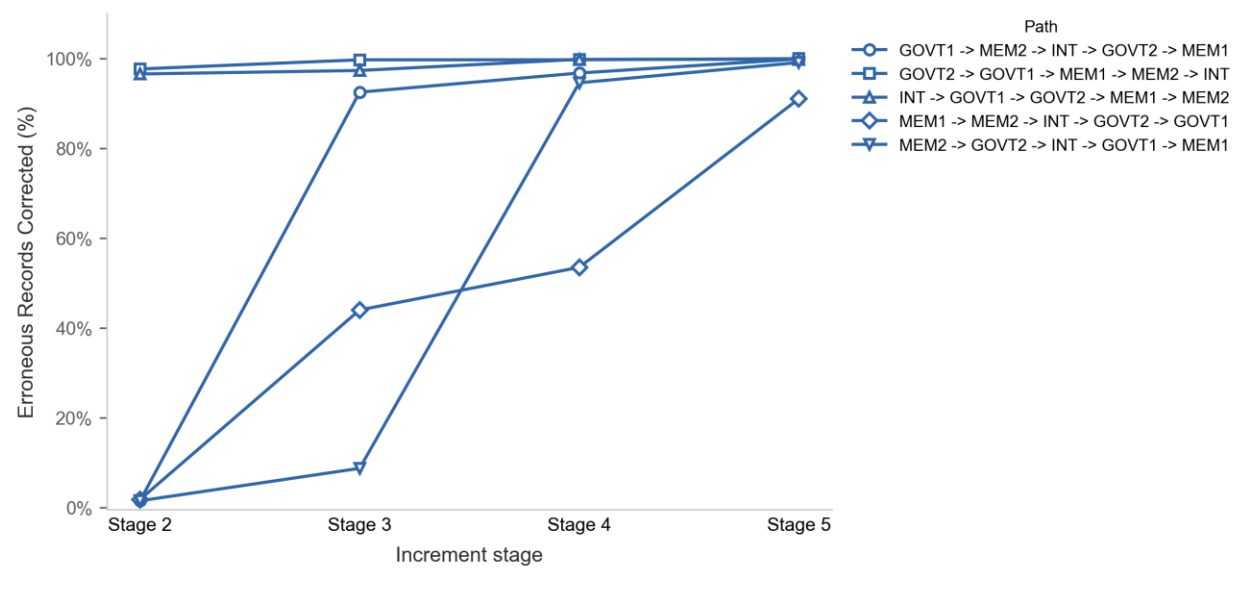
Even authoritative sources contain errors. The study quantifies the percentage of erroneous death dates corrected at each stage of consolidation. A full composite database corrects close to 100% of errors present in any single starting source. Critically, even GOVT1 sources, which are considered high-quality, benefit from quality correction when additional sources are added.
Building a database that meets all four criteria
A database that scores well on coverage but poorly on timeliness will fail for longitudinal cohort studies requiring current data. One that is timely but incomplete will fail at the cohort linkage stage. Research-grade mortality data requires all four dimensions to perform simultaneously.
The composite approach makes this achievable. The study demonstrates that across all 120 tested consolidation paths, adding sources produces consistent, measurable improvement across every metric.